Achilles Ruptures Are Surging — Youth Sports May Be Why
Nine NBA players tore their Achilles tendon during the 2024-25 season. The year before? Zero. Jayson Tatum, Damian Lillard, Tyrese Haliburton — stars at the peak of their careers, suddenly sidelined by the same devastating injury. NBA Commissioner Adam Silver called it serious enough to convene a panel of experts to study what’s going on.
But this isn’t just an NBA problem. It’s happening on pickleball courts, in adult basketball leagues, on weekend soccer fields, and during Tuesday night volleyball. Achilles tendon ruptures are surging across the board, and the people most at risk aren’t elite athletes — they’re you.
The Numbers Tell a Stark Story
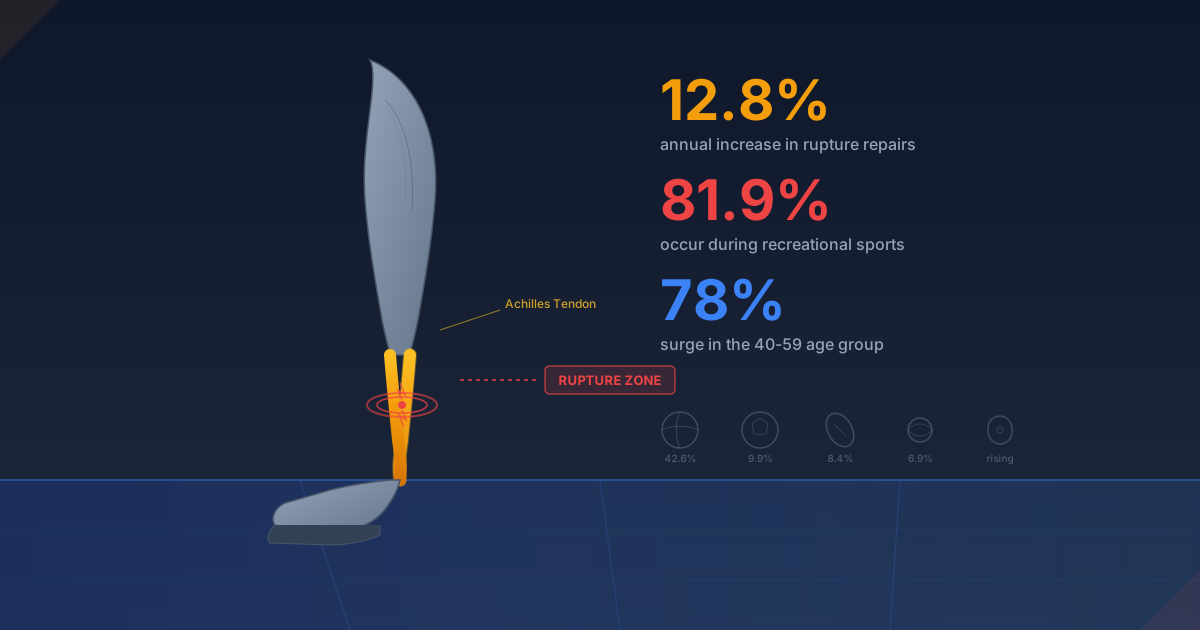
The data is hard to ignore. A large-scale analysis of 18,061 Achilles tendon repairs from 2015 to 2024 found that the incidence of rupture repairs has increased by 12.8% annually. The average patient is 45 years old with a BMI of 30.8 — in other words, a slightly overweight middle-aged person, not a professional athlete.
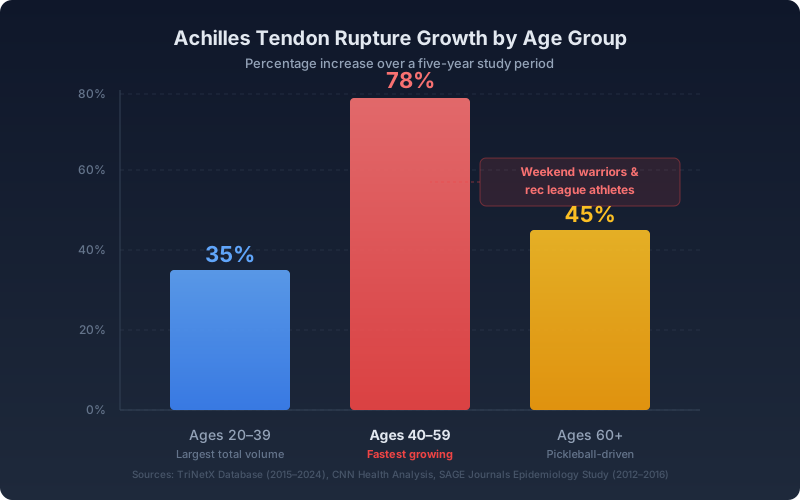
Sport and recreational activity account for 81.9% of all Achilles ruptures. Basketball leads the charge at 42.6%, followed by soccer (9.9%), football (8.4%), tennis (6.9%), and running (5.8%). And while younger men still make up the majority of total cases, the fastest-growing demographic is the 40-to-59 age group, which saw a 78% increase over a recent five-year study period.
The Achilles tendon now holds the unwanted distinction of being the most frequently ruptured tendon in the human body.
The Weekend Warrior Trap
Here’s the pattern doctors see over and over: someone sits at a desk all week, then shows up to a competitive rec league on Saturday and goes full intensity from the first whistle. Orthopedic specialists have a name for these patients — weekend warriors — and they’re filling up waiting rooms at an alarming rate.
The mechanism is straightforward. Your Achilles tendon is “mechanoresponsive,” meaning it adapts to stress slowly over time. Gradual, consistent loading makes it stronger. But long stretches of inactivity followed by sudden, explosive effort — the exact pattern of a weekend warrior — is the worst possible combination. Sedentary weekdays reduce the expression of key proteins that maintain tendon strength. Then Saturday arrives, and the tendon faces forces it’s not prepared to handle.
“This injury typically happens in your weekend warrior population, average age about 45 to 50, and about 80 percent of these cases are men,” notes Dr. Weatherall, an orthopedic surgeon specializing in foot and ankle injuries.
The COVID-19 pandemic offered a grim proof of concept. During 2020 lockdowns, physical activity plummeted. When restrictions lifted in 2021, Michigan Medicine physicians diagnosed more Achilles ruptures in a single month than they had in all of the previous year. A five-year tracking study showed ATR cases doubled from 196 in 2020 to 395 in 2021.
The Pickleball Factor
No sport illustrates the problem better than pickleball. With 13.6 million players and participation up 200% in three years, the sport has brought an entirely new demographic onto courts that demand quick lateral movement and explosive changes of direction — exactly the mechanics that shred an unprepared Achilles tendon.
Cedars-Sinai orthopedic surgeon Dr. Timothy Charlton calls it “an epidemic of pickleball Achilles tendon injuries.” The data backs him up. A Brigham and Women’s Hospital study found that pickleball foot and ankle injuries increased 6.5-fold from 2019 to 2023, and Achilles tendon ruptures were the single most common diagnosis, accounting for 39.4% of all foot and ankle injuries from the sport.
The demographics here are telling. Pickleball-related Achilles injuries tend to happen to older players — average age 64.5, compared to 48.6 for non-pickleball ruptures. Specialists are seeing ruptures in the 60-to-70 age group, often among women, a population that historically didn’t experience these injuries nearly as often.
Did Youth Sports Plant the Seeds?
This is where the story gets more complicated — and more interesting. The question isn’t just why are tendons snapping now, but whether decades of youth sports overuse weakened them in the first place.
The parallels to Tommy John surgery are hard to miss. Nearly 60% of all Tommy John surgeries in the United States are performed on 15-to-19-year-olds. Dr. Jim Andrews, one of the most prominent orthopedic surgeons in sports medicine, has reported a ten-fold increase in Tommy John procedures on high school and younger players since 2000. The culprit is well-established: year-round single-sport specialization, excessive pitch counts, and arms that never get a chance to rest.
The question for Achilles injuries is whether a similar pattern — years of repetitive stress during critical growth periods — is creating tendons that look healthy but carry hidden damage into adulthood.
The science suggests it’s plausible. According to the American Academy of Pediatrics, tendinopathies are the most frequent overuse injury in pediatric athletes, and repeated tendon strain is the strongest predictor of tendinopathic injury. Research shows that athletes who specialize in a single sport before puberty face 3.76 times higher burnout rates and significantly elevated injury rates compared to multi-sport peers. Training more than eight months per year in one sport increases serious overuse injury risk by 36%.
Here’s the mechanism that matters: overuse during youth doesn’t just cause acute injuries that heal. It can initiate a process called tendinosis — non-inflammatory degeneration of tendon fibers caused by accumulated microdamage. Unlike tendinitis, which involves inflammation and pain, tendinosis is often silent. The tendon weakens structurally without obvious symptoms. Combine that with the natural decline in blood supply to the Achilles tendon’s midsection as you age, plus the decreasing collagen strength that comes with time, and you have a tendon that’s been degrading for decades before it finally gives way during a Thursday night pickleball game.
Is This the Next Tommy John?
The comparison is compelling but imperfect. Tommy John surgery is a clear, direct line: youth overuse damages the UCL, and the ligament eventually fails. The data is clean and the causation is well-documented. MLB Commissioner Rob Manfred has explicitly said the Tommy John surge is a direct result of over-pitching in youth baseball.
Achilles ruptures are more multifactorial. Youth overuse is likely one ingredient in a recipe that also includes:
- Sedentary adult lifestyles that decondition tendons between bouts of activity
- Rising obesity rates — the average ATR patient has a BMI of 30.8
- More adults playing sports later in life, including high-impact activities they haven’t prepared their bodies for
- The boom of explosive recreational sports like pickleball, which draw older participants into movements their tendons can’t handle
- Certain medications — fluoroquinolone antibiotics and corticosteroids have been associated with increased tendon rupture risk
But the through-line is the same: what we do to young bodies echoes forward. A generation of kids who played year-round travel basketball, ran cross-country in the fall and track in the spring with no off-season, or specialized in a single cutting sport at age 10 may be carrying compromised tendons into their 30s and 40s. Layer on a desk job, twenty extra pounds, and a Saturday morning league that demands the same explosiveness as high school — and something has to give.
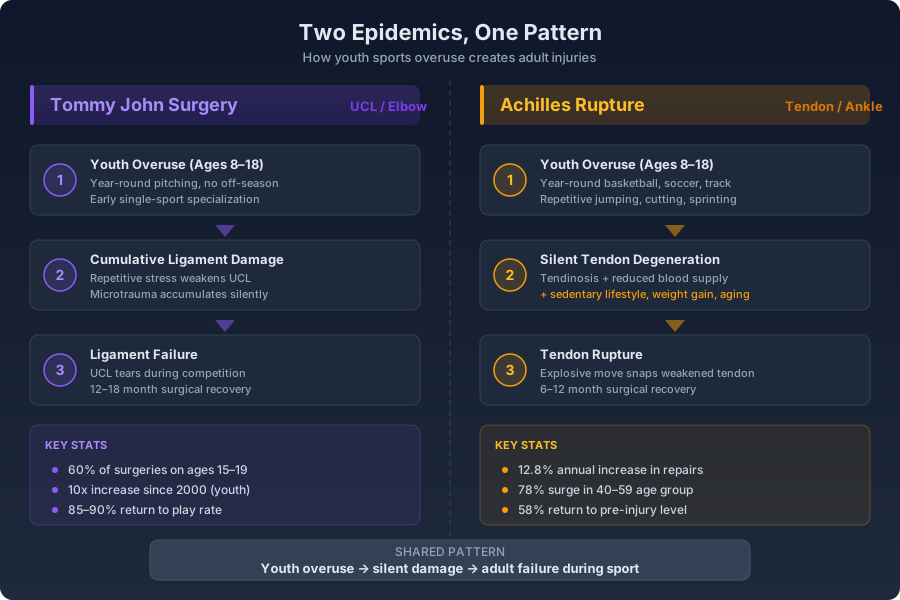
The data gap is real, though. Unlike Tommy John, where the surgical registry creates a clear epidemiological picture, there’s no long-term prospective study tracking youth athletes’ tendon health into middle age. The connection between adolescent overuse and adult Achilles rupture is biologically plausible and supported by mechanism research, but it hasn’t been proven with the same rigor. It’s an area that badly needs dedicated study.
What a Rupture Actually Costs You
If prevention doesn’t motivate you, the recovery timeline might. An Achilles rupture typically means surgery, followed by 6 to 12 months of rehabilitation before you’re back to full activity. You’ll spend weeks in a boot, months rebuilding strength, and potentially years returning to your pre-injury performance level.
The return-to-sport numbers are sobering. While studies show 65% to 100% of patients eventually return to some level of sport, only about 58% return at or above their pre-injury level. In professional sports, roughly 30% of athletes never return at all after an isolated Achilles rupture. And pickleball players who rupture their Achilles face an average return-to-play time of 18.4 months, with only half making it back to their pre-injury level.
Re-rupture rates run between 2% and 5% with surgery, and 8% to 12% with non-surgical treatment. Age is a significant factor — older patients consistently have the worst outcomes.
How to Protect Your Achilles
The good news is that this injury, while devastating, is largely preventable. The fix isn’t complicated, but it does require consistency — the exact thing weekend warriors tend to skip.
Stay active during the week. Walking 20 to 30 minutes three times a week keeps your tendons loaded and responsive. The worst thing you can do is sit for five days and then ask your Achilles to handle explosive movements.
Build calf strength deliberately. Eccentric heel drops — standing on a step with your heels hanging off the edge and slowly lowering down — are the gold standard for Achilles tendon health. Three sets of 15, daily. It’s boring. It works.
Ramp up gradually. If you’re starting a new sport or returning after time off, your enthusiasm will outpace your tendons. Start at half the intensity you think you can handle and build from there over weeks, not days.
Cross-train. Alternate high-impact activities with low-impact ones. Swimming, cycling, and rowing build cardiovascular fitness without hammering your Achilles.
Stretch and warm up properly. Calf stretches before and after activity maintain the flexibility that prevents acute tears. Don’t skip them because you’re running late to the game.
Watch your medications. If you’ve taken fluoroquinolone antibiotics (like ciprofloxacin or levofloxacin), be aware that they can weaken tendons for months afterward. Talk to your doctor before ramping up activity.
The Bigger Picture
The Achilles epidemic isn’t really about one tendon. It’s about a culture that pushes kids into year-round competitive sports, rewards specialization over development, and then produces adults who sit at desks for decades before expecting their bodies to perform like they did at 17.
Tommy John surgery became the canary in the coal mine for what happens when we overuse young arms. Achilles ruptures may be telling us the same story about young legs — we just don’t have the longitudinal data to prove it yet.
What we do know is this: the tendon that connects your calf to your heel is strong, but it has limits. Respect those limits during the week, and it’ll hold up on the weekend. Ignore them, and you might hear the pop that every weekend warrior dreads — the sound of your recreational sports life changing in an instant.